



Beyond Seal Strength Data: Understand What Drives Performance
Think about the last time you were part of a change management project involving a sterile barrier system. How much testing was performed to give confidence that the change did not adversely affect the sterile barrier? How much of that was seal strength testing? Now look through a wider lens and picture a packaging converter that supplies thousands of SKUs built from the same material combination going through that same change. When each organization performs an independent analysis (sometimes including a full aging study to address a change), it can lead to a massive amount of redundant peel testing performed for a change that may not even influence seal performance.
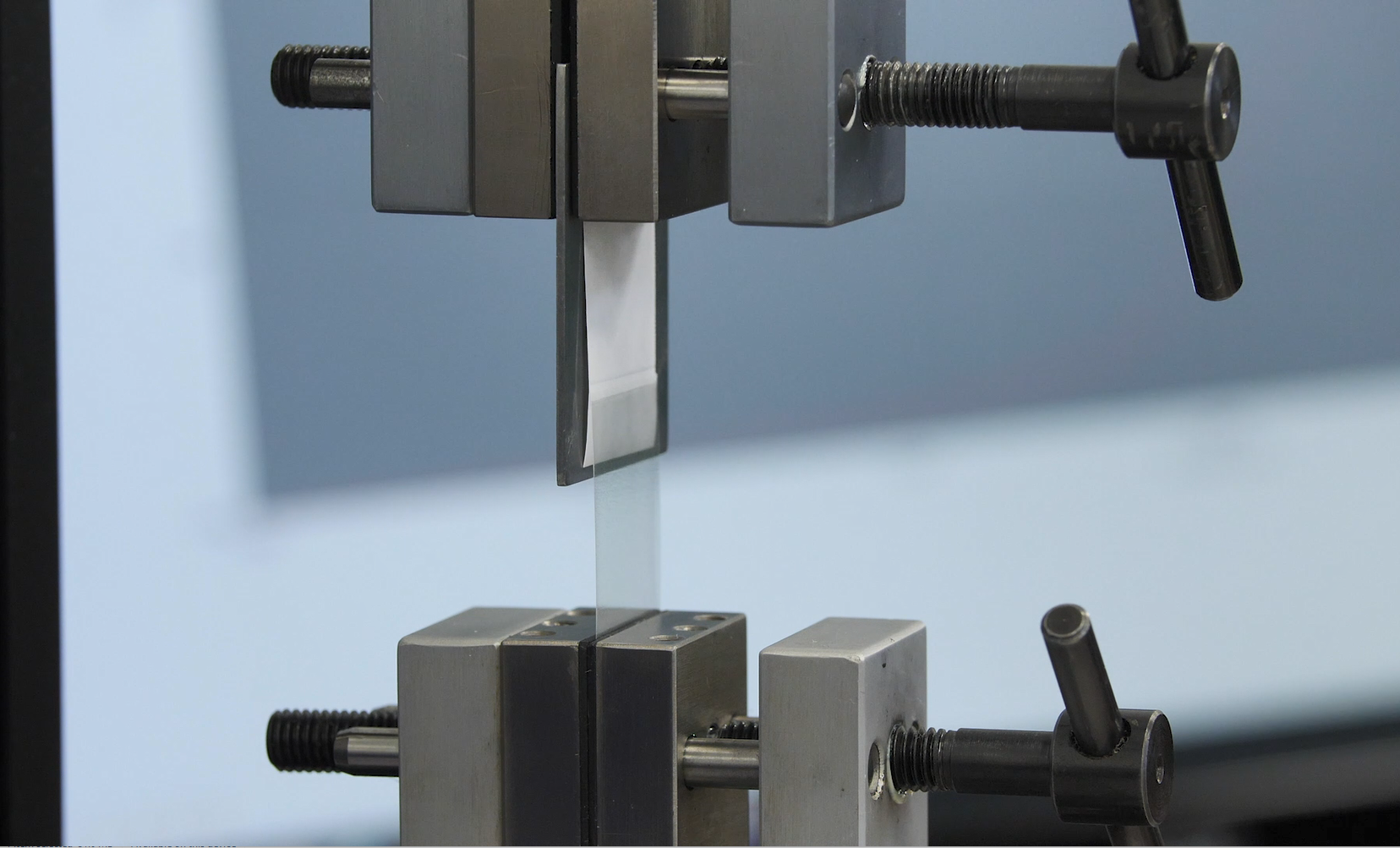
Seal strength testing is one of the most widely used tools in sterile barrier packaging. Because it produces a quantitative value that is easy to trend and compare, it has become a common component of package development, process validation, aging studies, and equivalency assessments. In many cases, this approach is entirely appropriate and, in some situations, essential. For example, changes to adhesive systems, sealant layers, or other components that directly influence seal formation may warrant extensive seal strength evaluation. But is seal strength always the most appropriate test to perform?
A Tendency to Rely on Seal Strength Testing
Those who have spent enough time in the healthcare packaging industry know that organizations tend to repeat large amounts of similar testing for the same material combination. But consider a seemingly minor change, such as a processing aid in the outer layer of a film lamination. The change must certainly be assessed. But in this case, is seal strength the most likely attribute to be affected?
Seal strength testing often becomes the default response simply because it is familiar, accepted, and relatively straightforward to generate. The result can be enormous amounts of data, repeated aging studies, and specifications that become increasingly restrictive over time. More data does not always lead to more understanding.
What Question Are We Trying to Answer?
Seal strength remains an essential characteristic of a sterile barrier system. ISO 11607-1 defines seal strength as the mechanical capacity of the seal to withstand force.
That definition is important because it reminds us that seal strength represents only one aspect of overall package performance. It does not confirm sterile barrier integrity, nor does it ensure a complete, clean seal.
Using the previous example, the outer layer of a film lamination is present for many reasons including protection, rigidity, and stability during heat sealing. If a low-level process aid is removed or changed, the assessment should begin with the purpose of the layer and that additive before determining which testing is appropriate.
Understanding the mechanisms that contribute to package performance can prove to be more valuable than the test data alone.
Returning to First Principles
Perhaps the most overlooked aspect of seal strength testing is that the data is simply a reflection of the underlying material design and the mechanisms that create seal performance.
Individual components are intentionally selected and designed to provide specific functions within a sterile barrier system. Their chemistry, structure, and performance characteristics establish an inherent expectation of seal performance long before a seal strength test is ever performed.
If a change does not influence those underlying mechanisms, then seal strength may not be the most meaningful way to evaluate equivalency. Instead of beginning with a test method, we should begin with first principles:
- What changed?
- What function does that component serve?
- Which package performance characteristics could realistically be affected?
- Could the change influence surface energy, coefficient of friction, oxidative stability, laminate performance, or other functional attributes?
- Does the change directly affect the sealing interface?
Only after answering these questions can the most appropriate evaluation strategy be determined. None of this diminishes the importance of seal strength testing. When changes directly affect the seal, seal strength testing may be one of the most important evaluations performed. The challenge is not determining whether seal strength is valuable, but determining when it is the most appropriate tool.
Perform the Right Assessment
Industry discussions increasingly focus on applying science- and risk-based approaches to change management and equivalency. Ultimately, organizations are responsible for providing the scientific rationale supporting their change assessments. Rather than treating every change the same, we have an opportunity to better align our testing strategies with the actual risks being addressed. For packaging engineers, ISO 11607-1 has important guidance in clause 9 and can be a great place to start the journey. Doing so can help ensure that the most appropriate test methods are selected while also optimizing the amount of testing necessary to provide confidence in the assessment.
Seal strength testing will continue to play a critical role in sterile barrier systems. The goal is not always to perform less testing, but to perform the right analysis and testing for the questions being asked. In some cases, seal strength may be the answer. In others, it may simply be one piece of the story. Sometimes the most important part of seal strength isn't the data itself, it's understanding what’s driving it.